Where Leadership First Takes Root | Growing Up Curious, Free, and Unafraid to Be Different.
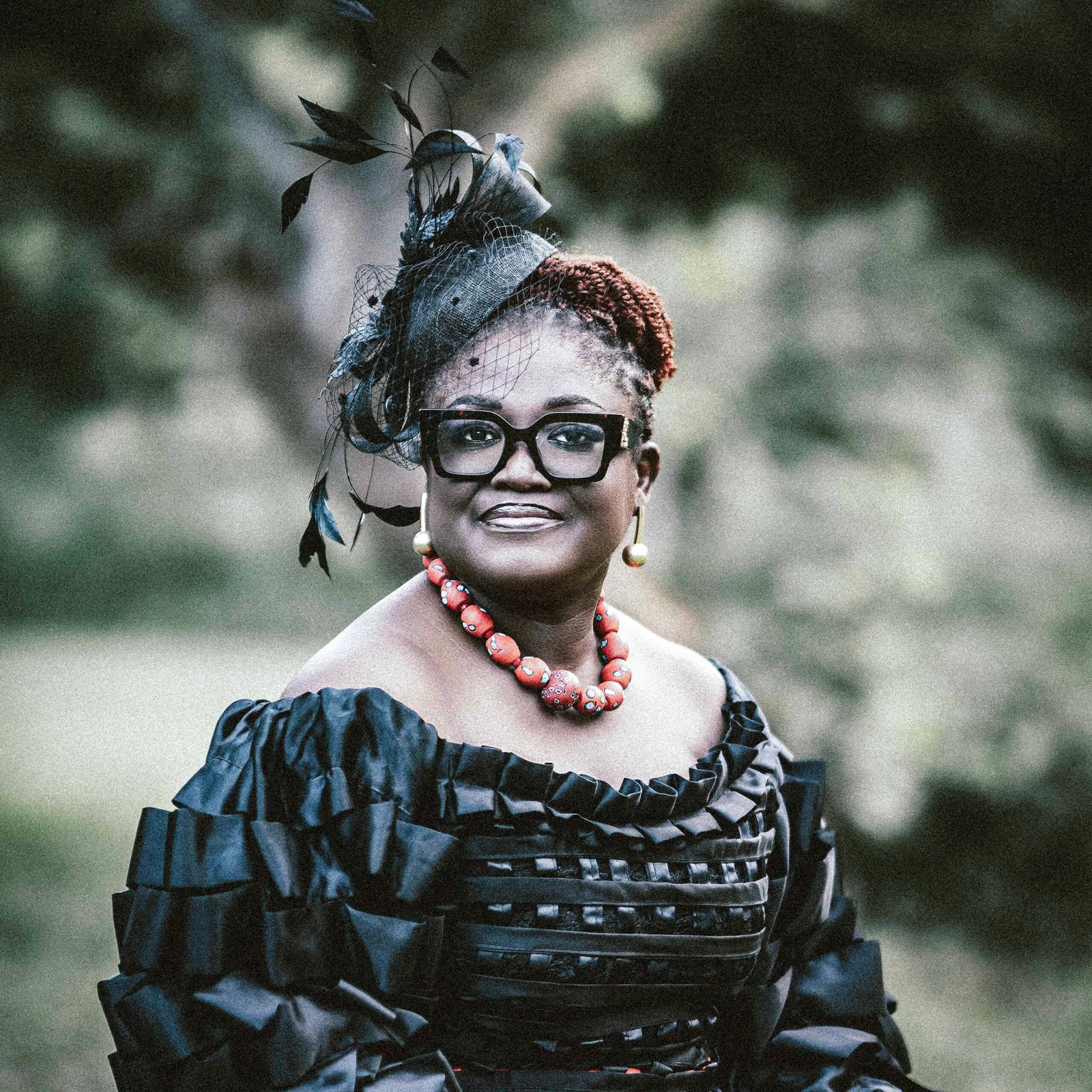
Leadership does not always begin on a big stage. Sometimes, it begins quietly, in a neighborhood filled with dusty playgrounds, borrowed books, and a curious mind that refuses to be idle. Born and raised in Tessano, Accra, Prof. Rosina grew up in a time when childhood was shaped more by imagination than by screens. Because technology was limited, children created their own joy. Outdoor games, books, and curiosity filled their days. The environment was clean and safe, allowing children to roam freely, hunt for goldfish in rivers, climb trees, and play until sheer exhaustion sent them home. Air pollution was minimal, and the roads were not yet crowded with vehicles.
From an early age, Rosina stood out, not because she was loud, but because she was active. She enjoyed playing with the boys, choosing games like Chaskele over Ampe. Even then, she was quietly challenging norms and leading with confidence, choosing what stretched her rather than what society expected of her.
How Structure and Self-Reliance Shape Great Leaders.
She came from a large family of intellectuals, with Wesley Girls’ blood running through her veins. That heritage shaped her mindset early. At Wesley Girls’ High School, discipline was not optional. It was a way of life. The boarding school experience trained her beyond academics, shaping her character, conduct, and sense of responsibility. She learned how to carry herself, how to be accountable, and how to strive for excellence in all she did. Leadership, however, is not formed by privilege alone. It is sharpened by initiative. During holidays and long breaks, while others rested, Rosina worked. She sold pastries and onions to support herself financially. These early experiences nurtured her entrepreneurial mindset and planted a strong desire to become a businesswoman. She wanted to create value and stand independently. Unknown to her, life was also preparing her for another path that would unfold in time.
The Evolution of a Mature Leader
Academically, she explored widely. In senior high school, she studied Economics, Literature, and Geography, gaining exposure to multiple fields of knowledge. From this experience, she learned a lesson she often shares with young people today. It is good to have knowledge in many fields, but it is better to specialize and master one.Like many young people with ambition, she hoped to pursue her tertiary education at KNUST to read pharmacy . Fate, however, placed her at the University of Ghana, Legon. Rather than resist the change, she embraced it, a decision that proved pivotal to her growth.
At Legon, she learned that progress requires intentional relationships. She chose her friends wisely, understanding that as one grows, one’s circle naturally becomes smaller. She avoided competitive friendships and surrounded herself with people who encouraged her, challenged her positively, and supported her vision. This wisdom remains especially relevant for today’s students navigating pressure, comparison, and social expectations.Through quizzes, campus activities, disciplined study, and purposeful living, Prof. Rosina did not wait for leadership to be assigned to her. She acted like a leader. Over time, the young girl with dreams of business evolved into a respected lecturer, shaping minds and influencing generations.
Becoming Before Being Chosen
Leading by Action, Relationships, and Purpose
Like every leader, she had her weaknesses. She struggled with written French, even though she could speak the language fluently. For many students, such a challenge would have become a permanent label. But her French teacher recognized her potential and refused to give up on her. That single act of patience taught her that one weakness does not define one’s intelligence or future.
Mentorship also played a key role in her development. Professors such as Natiamoah Badu, Professor Gordon, Professor Gyanmah, and Dr. Quartey, among others, were not just lecturers but mentors and friends who believed in her. During Prof. Rosina’s National Service, Dr. Dapaah introduced her to a team that molded her into a serious scientist, solidifying her interest in remaining in the field. At the core of her values was the influence of Wesley Girls’ Senior High School, guided by the motto, Speak the truth, right the wrong. This, combined with the firm and loving upbringing from strict but supportive parents, became her moral compass.
Challenges along the way pushed her to rely on her mother as a strong support system, and on prayer as a source of strength. She learned that some doors are opened and closed by forces beyond human control, and faith provides stability in uncertain times.Looking back, she acknowledges that her explorative nature was often misunderstood as stubbornness.
With maturity came patience and better decision making. Yet she remains clear about one truth. Every decision, whether right or wrong, shaped and transformed her into the person she is today. She also learned that while saving money is important, it should never override genuine needs or compassion for others. Guided by scripture, she believes that he who feeds the poor lends to God, and that leadership must always be rooted in empathy.
Reflecting on her time at the University of Ghana, she recalls that student numbers were fewer and accommodation was more available. However, access to knowledge was limited. Today’s generation faces the opposite reality. Knowledge abounds. Information is accessible. Mentors are visible, even if infrastructure is strained.This is why her message to today’s youth is clear and firm. This generation has no excuse to fail.What matters most is how students choose to act, with discipline, faith, patience, and purpose. When you lead with action, your story itself becomes an inspiration, just as Prof. Rosina’s continues to inspire many.
The Architecture of Impact: How Prof. Rosina Built a Legacy on Faith and Action
Many university students feel pressure to have life figured out before graduation. There is an expectation to choose the “right” course, follow a clear path, and avoid mistakes. Professor Rosina’s career and business journey show a different reality. One where adaptability, discipline, and values matter more than perfect planning. Her story offers practical lessons for students preparing to enter Ghana’s competitive professional and entrepreneurial landscape.
During her master’s studies, Prof. Rosina had to choose between parasitology and entomology. Although her interest was in parasitology, poor teaching made it unworkable. She made a difficult but thoughtful decision to switch to entomology. What initially felt like a compromise later became the foundation of her expertise and professional success. For university students, this highlights an important truth: your first plan does not have to define your future. What matters is your ability to adapt and commit fully to the path you choose.
Prof. Rosina transformed her academic training into a registered environmental consultancy. Through this business, she advises major extractive industry companies such as Goldfields and Newmont on environmental impact assessments. Her consultancy did not grow through shortcuts or aggressive promotion. It expanded mainly through word of mouth, built on competence, reliability, and trust. For students, this is a reminder that university education should go beyond grades. Developing practical skills and professional credibility early creates long-term opportunities.
Like many professionals and entrepreneurs in Ghana, Prof. Rosina faced significant challenges. Managing people from diverse backgrounds, dealing with inflation, and navigating complex relationships tested her resilience. These experiences reinforced the importance of integrity and trust in business. She learned that while technical knowledge is important, success is sustained through strong character and the ability to work effectively with people.
Years before it happened, Prof. Rosina was told she would become the Dean of Students. This is something she did not believe at the time. When the opportunity later arose, she applied and was appointed Dean of Students at the University of Ghana. In this role, she encountered students struggling with food insecurity, accommodation, and fees. Many were academically gifted but financially constrained. Through partnerships with corporate organizations, she helped about 5,000 students access financial support. She also observed students taking the initiative themselves, pooling resources to solve accommodation challenges. Her leadership approach demonstrates that true impact comes from service, empathy, and practical problem-solving. From her journey, Prof. Rosina emphasizes that students must strive to be marketable, skilled, disciplined, and purposeful. Failure is unavoidable, but resilience, the ability to rise after setbacks, is what shapes successful careers. University is not only a place for academic achievement. It is a critical period for building work ethic, values, and a clear sense of direction.
Professor Rosina’s career and business journey show that leadership is formed through everyday decisions. How you respond to challenges, how you treat people, and how seriously you develop your skills. You may not control where you start, but you can control the discipline and integrity you bring to your journey.For today’s university student, the message is clear: lead with action, stay adaptable, and let your values guide your path.